


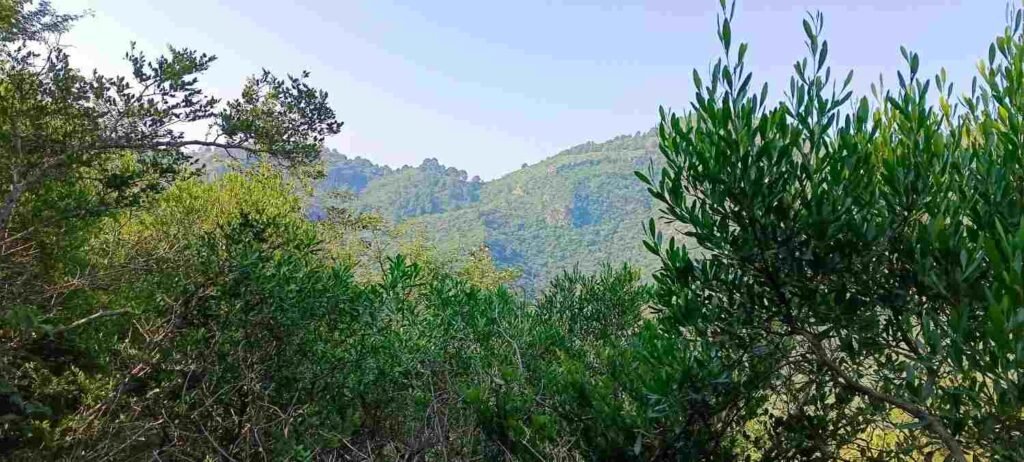
I still remember the first time someone told me to “just go up Trail 5, you’ll get it.” I didn’t get it. Not until I was about twenty minutes in, out of breath, questioning my life choices, and then the trees opened up and there was Islamabad, laid out flat below like someone had planned the whole city just for that view. That’s basically Margalla Hills Islamabad Pakistan in one sentence. Painful for ten minutes, then completely worth it.
If you’ve spent even one evening in this city you’ve probably noticed that green wall sitting behind everything, especially obvious around sunset from F-6 or F-7. People here don’t just admire it from a distance though. They climb it. Daily. Before office. After office. Rain, dust, whatever.
This isn’t going to be one of those pages calling everything “breathtaking” and “must-visit” fifteen times. It’s genuinely good — but you should know what you’re actually walking into. Which trail fits you, how long it realistically takes (not the polished version), what you might run into on the way, and when to go so you don’t end up regretting it by 11 am.
Where This Whole Thing Actually Is
Margalla Hills runs along the entire northern edge of Islamabad. Technically it’s part of the Sivalik range, the lowest tier of the Himalayan foothills — though ask any local, and they’ll just say “the hills”; nobody’s using that name day to day. The protected zone, Margalla Hills National Park, spans around 17,000 hectares and stretches close to 30 km across. Base level sits around 685 meters. The upper ridges push past 1,600, high enough that the forest genuinely looks and feels different by the time you’re near the top.
What actually surprises visitors, though, is how close this all is. Most trailheads are a 15-20 minute drive from the middle of the city. No need to plan a whole day trip around it. You just… go.
Which Trail Do You Actually Pick
There’s a numbered system, Trail 1 through 7, and no, they’re not all used the same amount. Some are basically empty on a Tuesday morning while Trail 5 already has a small crowd by 7am.
Trail 3 is the old classic, the one that’s been around forever. Starts near F-6, climbs through pine and open scrub toward Pir Sohawa. Tiring, not brutal — but your legs will remind you the next day, guaranteed. Many regulars end up using this as their weekly route once they’ve built up a bit of stamina.
Trail 5 is the one everyone points you toward first, and it earns that reputation honestly. Starts near Margalla Road in F-5, runs about 5km up toward Pir Sohawa Road, passes a stream and a small waterfall if there’s been recent rain, then opens into a proper skyline view near the top. Give it 2.5 to 3.5 hours realistically. Longer if you’re the type who stops for a photo every five minutes — and let’s be real, you will.
Got kids along, or just not in the mood to suffer? Trail 2 connects Marghzar Zoo to Daman-e-Koh, much gentler. Trail 4 links Trail 3 and 5 together, handy if you start one and decide halfway through you’d rather be on the other (happens more than you’d think).
Then there’s Trail 6, which most tourists have literally never even heard of. Starts behind Faisal Mosque, way quieter, has a small mountain biking stretch and a birdwatching spot tucked into it.
Daman-e-Koh and Pir Sohawa
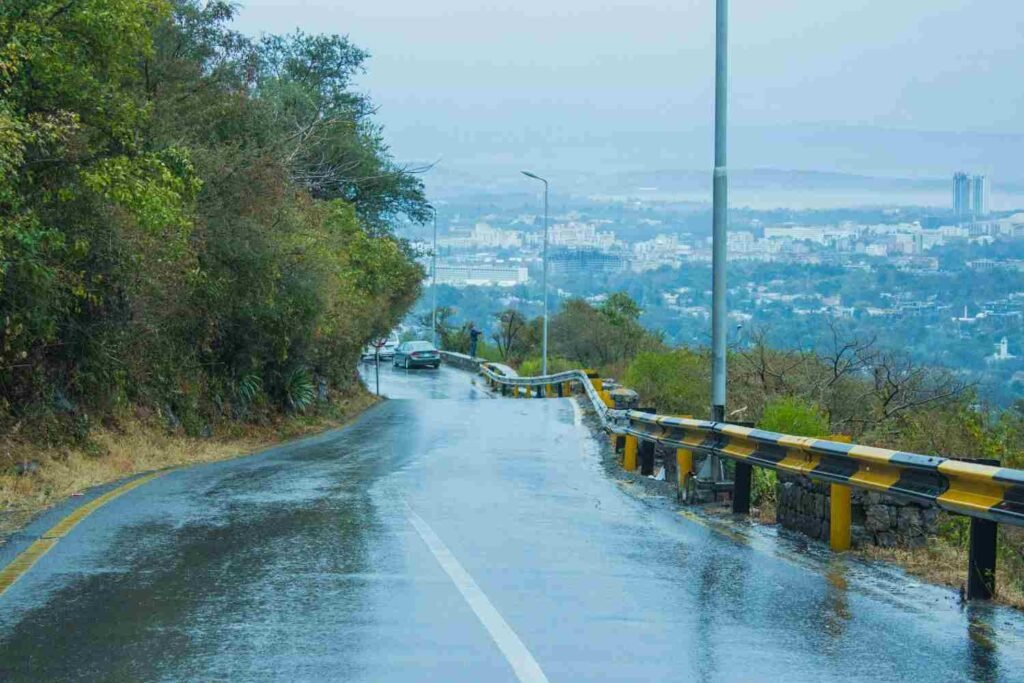
Daman-e-Koh sits roughly halfway up, and you don’t need to hike at all — just drive straight there. It’s that classic Islamabad shot, city flat below, Faisal Mosque somewhere in the frame. Go around sunset if you can. Yes, it’ll be crowded. Everyone’s there for the same reason though, so it’s not really a complaint.
Keep going, and you’ll hit Pir Sohawa, higher up, noticeably cooler air. This is where places like Monal are, and eating there while the city lights start switching on beneath you is one of those things that sounds cheesy on paper and then somehow isn’t once you’re actually sitting there.
Okay, But What’s Actually Living Up There
This is the part that catches people off guard, assuming it’s just a walking path with a few trees scattered around. Margalla Hills National Park has real wildlife in it. You’ll almost certainly spot langur monkeys somewhere along the route; they’re used to hikers by now and mostly ignore you unless food’s involved. It’s rated pretty well among birdwatchers too; kites and hawks circling overhead are a fairly normal sight if you actually remember to look up once in a while. Wild boars turn up occasionally in the thicker sections. And leopards, yes, they do technically live in the park — but don’t stress over it either way; sightings are rare enough that hikers who’ve been coming here for years have genuinely never seen one.
The rule that matters most: keep distance, don’t feed anything, stay on the path.
When Should You Actually Go
October through April, no real debate there. Cooler air, clearer skies, the view honestly hits different without haze sitting over everything. Spring adds a bit of green and some wildflowers if timing works out. Winter mornings tend to give the sharpest photos. Summer’s doable too, just start early — by 10 am the sun on Trail 5 stops being anything close to fun.
A Few Things Nobody Tells You Beforehand
Real shoes, not sandals — trails get slick fast, even after light rain. Carry more water than feels necessary; there’s barely any shade higher up. Go early. Cooler, quieter, better light for photos too. Skip the quieter trails solo if you can avoid it, or tell someone your plan at least. Don’t leave trash behind. Small thing, still matters.
Worth It?
Yeah, honestly. Margalla Hills Islamabad Pakistan isn’t some overhyped checkbox tourists tick off — it’s genuinely one of the better parts of visiting this city, whether that’s a quick sunset stop at Daman-e-Koh or the full climb up Trail 5 followed by dinner at Pir Sohawa. Just don’t underestimate the sun, wear decent shoes, and give yourself more time than you think you’ll need. That’s really the whole trick.
Frequently Asked Questions
1. What are the Margalla Hills, in simple terms?
A range of hills along the north side of Islamabad, part of the outer Himalayan foothill system: the city’s natural edge and its favourite outdoor escape, both at once.
2. Do locals actually use it or is it mostly tourists?
Locals go constantly, before work, weekends, whenever. Tourists show up more for the novelty. Both crowds mix fine on the trails, honestly.
3. Best trail for someone doing this for the first time?
Trail 5, no contest.
4. How long does it actually take?
Depends which trail. Some finish in under an hour. Trail 5’s realistically 2.5 to 3.5 hours one way.
5. Do I need a guide?
Not really. Main trails are well marked and busy enough you won’t get lost. A guide’s more useful if you want local stories or you’re pressed for time.
6. Is it safe to go alone?
On the popular trails, generally yes. Still worth telling someone your route, especially if you’re doing Trail 6 or somewhere quieter.
7. What will I actually run into up there?
Monkeys, pretty much guaranteed. Birds if you look up. Wild boars sometimes. Leopards technically exist in the park, but actually seeing one is rare enough it’s barely worth thinking about.
8. When’s the best time to go?
October to April.
9. Is entry free?
Mostly, yes. Some viewpoints or parking spots might charge a small fee, and that can shift over time, so it’s worth checking once you’re there.
10. Can I bring kids?
Yeah, especially to Daman-e-Koh or Trail 2. Older kids up for a bit more can manage Trail 3 with an adult nearby.
11. What should I pack?
Decent shoes, water, sunscreen, something light for higher up where it cools down, and a charged phone for photos.
12. Best place to eat after?
Pir Sohawa. Monal specifically, if the view matters as much as the food to you.