


Explore Home Gardening in Skardu encourages physical activity and reduces stress, making it a beneficial benefits and hobby for people of all ages. In the high altitude of Skardu city, home gardening has emerged as a vital strategy for economic reliance. Due to geographical isolation and harsh, freezing winters, the city relies heavily on expensive food transported from lower regions mostly from Punjab and Sindh.
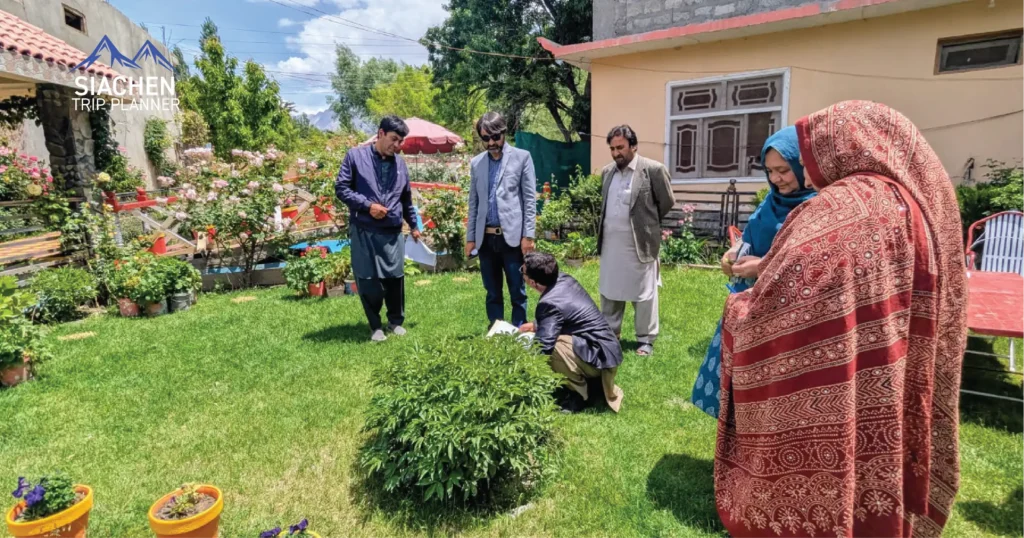
The agro-climatic condition of Skardu is highly suitable for the production of delicious deciduous fruits leafy, nutritious vegetables and beautiful ornamental flowers. Skardu possesses extraordinary horticultural potential due to its favourable climate, fertile valleys, natural water resources, and rich biodiversity. Fruits such as apricots, cherries, apples, walnuts, and sea buckthorn etc, vegetable like Cauliflower, Potato, Onion, etc and flowers like Rose, Chrysanthemum, etc. have the capacity to strengthen the regional economy and improve livelihoods. Skardu relies heavily on expensive, down-country vegetable imports, which often arrive degraded in nutritional value. Kitchen gardening is the practice of growing vegetables, herbs, flower and fruits in a small space near the home. It is becoming increasingly popular because it provides fresh, organic and healthy food for families while also reducing household expenses.
The purpose of the visit was to evaluate the overall impact of Home gardening in Skardu city on household nutrition, livelihood and hobby.
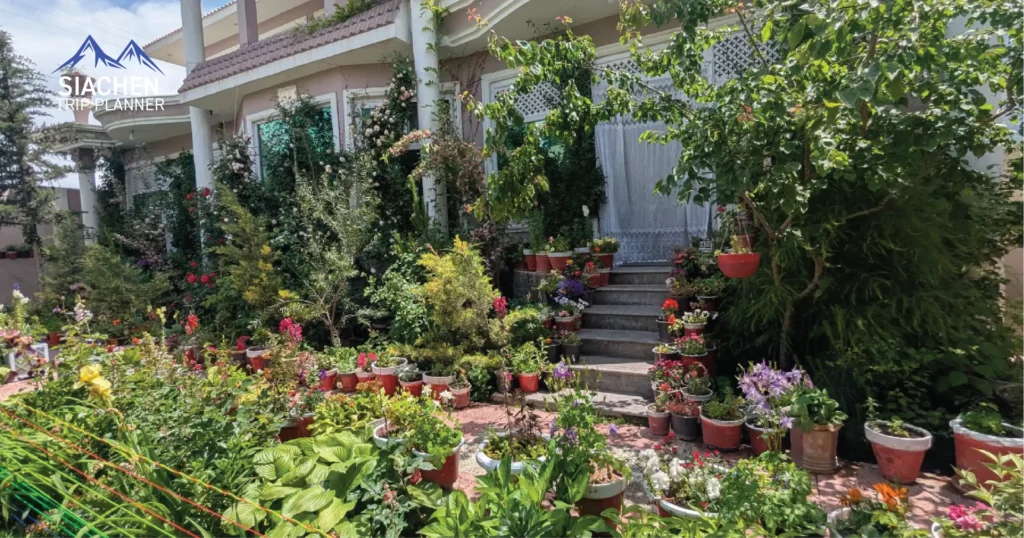
The purpose of the to explore home gardening
A three-day field visit was conducted to review and promote home gardening activities in the target area of skardu city. The visit was organized with the following key objectives:
- To encourage and strengthen women’s participation and empowerment through gardening activities.
- To promote household and community-based gardening practices.
- To encourage climate-resilient and environmentally sustainable practices through Home gardening initiatives.
- To Promoting home gardening as a beneficial hobby that improves health and nutritive diversity.
Success stories of Home gardening in Skardu
40 years old, Fatima bibi w/o Muhammad Khan is residing in the village Katpanah Union council Sundus District Skardu. Fatima bibi and her family living below poverty line compromising of 4 family members in a small house at Sundus. She himself and her family are living below poverty line having least access to basic life needs. Fatima bibi, husband was a daily wages labor in local market in Skardu city and was the only source of income to support such large family. Even she was unable to meet the basic food needs of his large family. Fatima bibi and her family are living a miserable & hard-hitting life having least access to basic life needs.
He have own 8 kannal of irrigated land. Farming is source of livelihood. He cultivates Cucumber, Cauliflower, Potato, Onion, Bringal and Raddish. Barseem is grown for his livestock. Vegetables seed availability is big problem every year we brought seed from middleman the quality of seed is no graded lots of mixture which carries disease and ultimately low production of yield.
During in meeting with Skardu Development Authority officials, I have shortlisted and avail seed from Government department. I have avail one bags proper tagged and quality of seed is very good and no impurities and graded well. Such quality of seed seeds never avail in my life. I have sown this variety. I am very happy. The crops was very healthy and no diseases.
He suggested that “Such like intervention are crucial in generating additional income sources for small land holding farming community farming community to reduce poverty.
Visit Activities and Observations
During the field visit, various Home gardening sites established by participants were observed and assessed. The focus of the visit was mainly on gardening practices, including ornamental and household-level plantation activities. Explore the Home gardening in Skardu
The following observations were made:
- Around 19 participants, predominantly women, participated actively in the activity.
- Some participants had already initiated kitchen gardening activities and demonstrated satisfactory progress.
- A number of participants had adopted small-scale gardening initiatives at the household level.
- Beneficiaries showed interest and motivation towards improving gardening practices.
- Several challenges were identified during field interactions, including financial constraints, technical agriculture skill and limited resources affecting the initiation and continuation of gardening activities.
- Some participants still require additional support and guidance for successful implementation of kitchen gardening practices.
- Managing home gardens gave women direct control over a valuable economic asset, by producing food at home.
Interaction and Findings
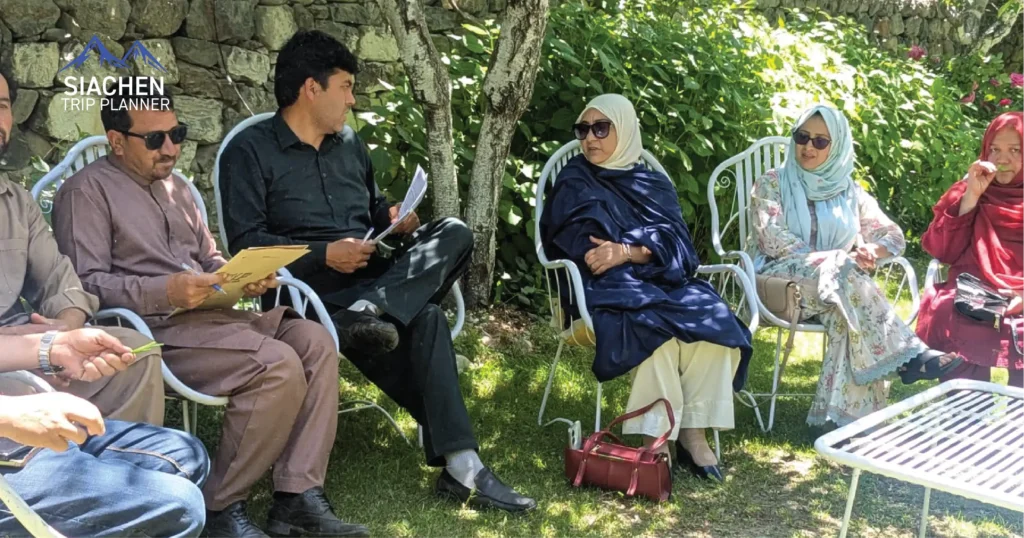
Detailed discussions were conducted with participants regarding their experiences and challenges. Participants expressed interest in expanding gardening activities and highlighted the need for technical and financial support to improve implementation.
To encourage participation and recognize performance, an assessment and ranking process was undertaken. Outstanding participants will be recognized through awards and appreciation mechanisms to promote healthy competition and encourage wider adoption of kitchen gardening practices within the town area.
Recommendations
- Continue regular follow-up visits and technical guidance for participants.
- Provide capacity-building sessions on improved gardening techniques and climate-smart practices.
- Explore support mechanisms to address resource and financial constraints.
- Encourage wider community participation, particularly among women.
- Continue recognition and award-based initiatives to motivate participants.
Conclusion
The field visit remained productive and highlighted encouraging participation in kitchen gardening activities, particularly among women. The initiative has shown potential for improving household-level gardening practices while supporting environmental sustainability and community engagement.
This competition can expand from a pilot project into a permanent regional network. This will establish Skardu as a leading model for climate-smart community agriculture, ensuring long-term self-reliance for generations to come. Continuous technical support and follow-up activities will further strengthen the impact and sustainability of the initiative.
Frequently Asked Questions (FAQs)
Which types of vegetables are grown in Skardu city?
The climate of Skardu is harsh in winter, and summer is mild. Most commonly grown vegetables are Potato, Onion, Cole crop, lettuce, Radish, Carrots, Peas, and Turnip etc. In Skardu, the most commonly grown vegetable is potato also used as a cash crop.
Is Skardu climate is suitable for home gardening?
The climate of Skardu is dry arid zone is highly suitable for agriculture particularly temperate fruits and vegetables. While the summer is support for variety of lucrative crops. Summer temperature varies between maximum of 270C and minimum 8C which is highly suitable heaight for plant growth.
What is the ideal pH for home gardening in Skardu?
In Skardu city pH of soil is slightly alkaline. Most vegetable will perform well when the soil pH from 6.2-6.7. High pH level create problems such as scab disease in Potatoes. Low pH may requires application of lime to increase pH levels. Recommended liming will be provided in your soil test result.
What are common pests in home gardens?
Common disease of home garden is Skardu is early blights, late blights and leaf roll over on Potato and powdery mildews on cucumber, Nematodes for tomato and back scab for potato.
Can home gardening contribute to environmental protection?
Off course. Home gardening improves air quality, increases greenery and increases sustainable use of natural resources. Home gardens also create vital local habitats for pollination. Home gardening plants absorb atmospheric carbon dioxide and release oxygen during photosynthesis.